The authors would like to acknowledge the contributions to this article by Alice Deighton, Alyssya Warty-Hasan, Amanpreet Bajwa, Anna De Freitas, Charlie Bevis, Emily Edwards, Frederico Branco, Georgia Cao, Ifeoma Onyearu, Imandi Mudugamuwa, Jennifer Reynolds, Jess Taylor, Lucy Reynolds, Madeline Lee, Matthew Greenhill, Melissa Diaz, Mitch Hardie, Monique Dunphy, Rose Hackett, Sharni Selzer, Taylor Empeigne and William Zheng.
Introduction
In the year since our last climate litigation update, the global landscape of climate-related litigation has expanded significantly in both scale and ambition. As in previous years, most new cases were filed in the United States, however the pace of activity in other jurisdictions has increased significantly. Jurisdictions such as Ireland, Kenya, and Sweden have seen notable new cases, whilst international courts and tribunals have delivered landmark advisory opinions which are reshaping state obligations.
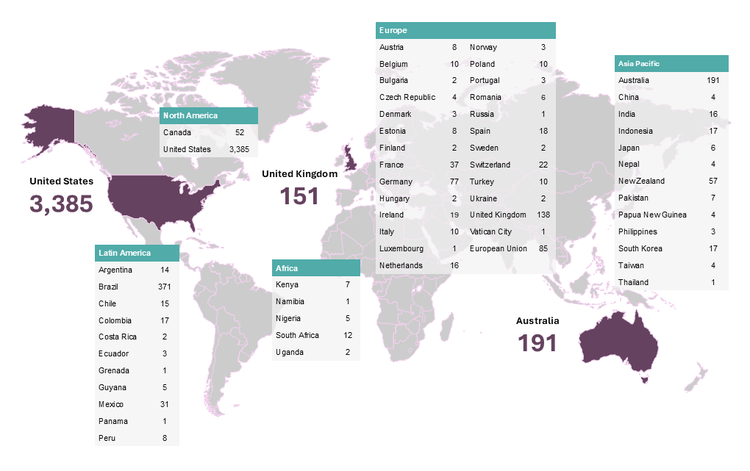
As of October 2026, the total number of climate change cases filed globally has reached 4,993, building on the approximately 3,099 cases recorded as of July 2025.Sabin Center for Climate Change Law, “Climate Change Litigation Databases” (September 2026). Accessible online here: Climate Change Litigation Databases - Sabin Center for Climate Change Law
In this update, we consider the broad trends in recent climate litigation and then consider a selection of standout cases from the past year in more detail.
Key trends
Reviewing the developments in climate litigation since July 2025, it is clear that climate litigation is no longer an emerging practice area – it is an established and rapidly evolving area globally. Numerous landmark judgments and advisory opinions delivered during this period have shifted norms and expectations with regard to state obligations, corporate accountability for emissions, shareholder rights, and the role of environmental impact assessments in planning decisions.
The following are just some of the trends we have identified from this period:
- Role of international courts & tribunals: The International Court of Justice (ICJ) delivered its Advisory Opinion on Obligations of States in respect of Climate Change in July 2025, unanimously finding that all States have binding legal obligations to protect the environment from greenhouse gas (GHG) emissions and combat climate change. This opinion has already been cited in domestic litigation, including the Herbata Data Centre case in Ireland. Additionally, the Pan African Lawyers Union has submitted a request for an advisory opinion from the African Court on Human and Peoples’ Rights regarding African States’ human rights obligations in the context of climate change.
- Climate-related discrimination and adaptation obligations: A significant new frontier has emerged in which litigants allege that governments have discriminated against vulnerable populations by failing to help them adapt to climate change. The landmark Bonaire ruling, in which the District Court of The Hague found the Dutch State had breached Articles 8 and 14 of the European Convention on Human Rights (ECHR) by affording less climate protection to Bonaire’s residents, represents a novel application of the European Court of Human Right’s KlimaSeniorinnen framework alongside the ICJ Advisory Opinion.
- Environmental impact assessments and planning challenges: There have been several significant decisions concerning whether climate impacts - including scope 3 emissions - must be factored into environmental impact assessments and planning decisions. The Herbata Data Centre challenge in Ireland, the Center for Biological Diversity settlement in the United States, and the MACH Energy appeal in Australia all illustrate the increasing judicial scrutiny of whether decision-makers have adequately considered the climate impacts of major projects.
- Government-initiated litigation and regulatory rollbacks: A notable trend in 2026 is the interplay between government action and litigation. In the United States, the EPA’s rescission of the Endangerment Finding and repeal of GHG emissions standards for motor vehicles has prompted immediate legal challenges. At the same time, a presidential memorandum halting federal approvals for wind energy projects was declared unlawful by a court. The federal government has also challenged California’s fossil fuel setback restrictions, illustrating the growing tensions between federal and state climate policies.
- Greenwashing and transition plan accountability: Climate litigation continues to hold companies to account for their environmental claims and transition commitments. Australian courts have established key greenwashing principles, whilst settlements in the EnergyAustralia case and Pittsburg Data Centre case demonstrate the practical impact of such claims. In the US, a class action against Apple for ‘carbon neutral’ marketing claims was dismissed, illustrating the evidentiary thresholds courts will require. Meanwhile, corporate transition plans are being challenged where companies’ stated net zero targets are alleged to be inconsistent with their ongoing emissions.
Key cases
In the remainder of this update, we consider these and other notable cases from around the world which have shaped the development of climate litigation over the past year.
Administrative law
Ireland | Friends of the Irish Environment v An Coimisiún Pleanála (Herbata Data Centre case)
On 16 September 2025, Friends of the Irish Environment and Friends of the Earth Ireland appealed Kildare County Council’s decision to grant permission for the proposed €3 billion Herbata Data Centre in Naas, to the Irish planning authority. The appeal rests on several grounds. First, the appellants argue the development is unlawful because it is inconsistent with Ireland’s Climate Action Plans and carbon budgets, with estimated annual emissions of approximately 950,000 tCO₂eq, which is nearly a quarter of the electricity sector’s carbon budget for 2026–2030. Second, the campaigners allege the Environmental Impact Assessment contains basic errors, including miscalculated greenhouse gas emissions and contradictory figures. The groups further contend that proposed mitigation measures, such as hydrogen and corporate power purchase agreements, are speculative and unsupported by current government policy.
Germany | German Environmental Aid Association (DUH) v Mittelplate
In 2024, the German Environmental Aid Association (GEAA) submitted an objection to the State Authority for Mining, Energy and Geology against oil production by Wintershall Dea Germany (WDG) on the Mittelplate oil drilling platform. After an initial refusal of this objection, the dispute continued to the Schleswig-Holstein Administrative Court (SHAC) with the GEAA arguing that WDG failed to carry out a Fauna-Flora-Habitat impact (FFH) assessment as part of their operating plans. In March 2026, the SHAC issued a preliminary injunction halting all oil production by WDG on the platform. The platform sits within the Natura 2000 network, and any project capable of significantly impacting it requires an FFH assessment. As WDG’s most recent operating plan inventory review had not included such a review, the SHAC found their production permit to be unenforceable. The ruling highlights a shift in European climate litigation toward rigorous enforcement of pre-existing nature conservation obligations.
United States | Center for Biological Diversity v City of Pittsburg (Pittsburg Data Centre case)
In this case, the Center for Biological Diversity challenged the City of Pittsburg’s approval of the Pittsburg Technology Park Specific Plan and certification of its Environmental Impact Report (EIR) in November 2024. The project, proposed by Pittsburg Data Hub, involves the development of warehouse and data centres across 76 acres. The Center alleged the EIR failed to adequately disclose and mitigate significant environmental impacts including air quality degradation, greenhouse gas emissions, wildfire risk and harm to biological resources, violating the California Environmental Quality Act. Following negotiations after filing on 2 December 2024, the parties reached a settlement agreement requiring the City of Pittsburg's adoption of a Mitigation, Monitoring and Reporting Plan for the Phase I Data Center, as well as a Future Review Resolution requiring an EIR be certified alongside any approval of a discretionary entitlement for future warehouse/logistics centre projects.
United States | Metropolitan Congregations United for St Louis v EPA
On 18 February 2026, the US Environmental Protection Agency (EPA) rescinded the Endangerment and Cause or Contribute Findings for Greenhouse Gases Under Section 202(a) of the Clean Air Act (Endangerment Finding) and repealed standards for greenhouse gas emissions for motor vehicles and engines. These instruments formed the basis for US environmental protections relating to the threat posed to public health by greenhouse gas emissions from motor vehicles and engines. On 26 February 2026, the Metropolitan Congregations United for St Louis and Missouri Coalition for the Environment challenged this EPA action. The petition for judicial review contends that the repeal of the Endangerment Finding violates obligations under the Clean Air Act to protect public health and the environment. The court is yet to hand down its findings.
Human and/or constitutional rights
Netherlands | Greenpeace Netherlands and 8 citizens of Bonaire v the Netherlands
On 28 January 2026, the District Court of The Hague ruled that the Dutch State had failed to protect the residents of Bonaire, a Dutch-Caribbean island, from the impacts of climate change, in breach of its positive obligations under Articles 8 and 14 of the ECHR and Article 1 of Protocol No. 12. The decision applied the ECtHR’s KlimaSeniorinnen framework and the July 2025 ICJ Advisory Opinion to assess both a state’s mitigation and adaptation measures. The court found that the Dutch Climate Act 2023’s interim targets do not comply with current UN standards. The State was ordered to incorporate binding economy-wide emissions-reduction targets within 18 months and implement a national climate adaptation plan covering Bonaire by 2030. The court also held that the State discriminated against Bonaire’s residents by affording them less protection than those in the European Netherlands, despite Bonaire facing greater and more immediate climate risk. The judgment was declared provisionally enforceable. On 10 April 2026, the Dutch State announced it would appeal.
Australia | ACF v Minister for the Environment and Water
The Australian Conservation Foundation (ACF) is seeking judicial review of the September 2025 decision of the Minister for the Environment and Water to approve the extension of Woodside's North West Shelf gas project, allowing the Karratha Gas Plant to continue operating until 2070, processing up to 18.5 million tonnes of LNG per year. ACF argues the Minister acted unlawfully under the Environment Protection and Biodiversity Conservation Act 1999 (EPBC Act) on five grounds, including failing to consider the project's contribution to climate change (including Scope 3 emissions), improperly relying on economic benefits of a separate unapproved development, and approving the project without determining the composition of third-party gas and resulting emissions. A related challenge by Friends of Australian Rock Art, also seeking review of the Minister’s approval decision, was heard together with ACF's case. The matters were heard concurrently by the Federal Court in July 2026, and the court has reserved its judgment. The case is a significant legal test of how climate change must be considered under the EPBC Act.
Financing and investment
Australia | MACH Energy Australia Pty Ltd v Denman Aberdeen Muswellbrook Scone Healthy Environment Group Inc
On 7 October 2026, the High Court of Australia delivered its first substantive climate change decision and dismissed MACH Energy Australia Pty Ltd’s (MACH) appeal concerning the approval of the Mount Pleasant Coal Mine extension in the Upper Hunter Valley. The Court unanimously rejected the NSW Court of Appeal's finding that section 4.15(1)(b) of the Environmental Planning and Assessment Act 1979 (NSW) required the consent authority to undertake a separate assessment of the local impacts of climate change in the Hunter Valley. Instead, the High Court held that consent authorities must consider the likely impacts of a development, which are not confined to impacts within the locality. However, by a three-to-two majority, the High Court held that the Independent Planning Commission (IPC) failed to consider whether conditions should be imposed to minimise Scope 3 greenhouse gas emissions to the greatest extent practicable, as required by clause 2.20 of the State Environmental Planning Policy (Resources and Energy) 2021 (NSW). As a result, the appeal was dismissed and the development consent remains invalid. This decision reinforces the need for consent authorities to expressly consider whether conditions addressing Scope 3 emissions should be imposed for mining, petroleum and extractive industry developments in NSW.
Advisory opinions
International Court of Justice | Advisory Opinion on Obligations of States in respect of Climate Change
The International Court of Justice (ICJ) issued a landmark advisory opinion in July 2025, finding States have obligations under climate change treaties (UNFCCC, Kyoto Protocol, Paris Agreement), international law, and human rights law to protect the climate system from anthropogenic greenhouse gas emissions. The obligations include: Member States have an obligation to adopt measures to mitigate greenhouse gas emissions and adapt to climate change; States must take the lead by limiting their greenhouse gas emissions and enhance their sinks and reservoirs; the ICJ highlighted the duty between States to co-operate and pursue the 1.5°C temperature goal through progressive nationally determined contributions and co-operating through technology and financial transfers. The opinion highlights the importance of States acting with due diligence in taking measures in accordance with their own responsibilities. States may be responsible for regulatory failures regarding private actors’ emissions, and all States have a legal interest in their enforcement.
Africa | Request for an Advisory Opinion submitted by the Pan African Lawyers Union (PALU)
The Pan African Lawyers Union and the African Climate Platform have submitted a request for an advisory opinion to the African Court on Human and Peoples’ Rights concerning the obligations of African States in the context of the climate change crisis. The request seeks clarification on the scope of African States’ human rights obligations in addressing climate change and the measures required to protect the rights of those most affected by its impacts. The advisory opinion, if issued, would be the first from an African regional court addressing states’ climate obligations and could have significant implications for climate governance across the continent.
Tort law
Australia | Pabai Pabai & ors v Commonwealth of Australia
Torres Strait traditional owners commenced proceedings in the Federal Court of Australia against the Commonwealth, claiming the Government had been negligent in not protecting them from the impacts of climate change and had breached a duty of care by failing to set greenhouse gas emissions reduction targets in line with the ‘best available science’. Justice Wigney dismissed the Applicants’ case, finding that matters relating to government policy are unsuitable for courts to assess and therefore cannot be the subject of a common law duty of care. The court also found that cultural loss, as distinct from physical damage to property, was not a recognised head of compensable damage in negligence. The decision highlights the limits of tort law as a vehicle for compelling government climate action. The plaintiffs have filed an appeal which has been heard in the Full Federal Court, and judgment is pending.
United Kingdom & the Philippines | Casquejo and others v Shell plc (the Odette Case)
In December 2021, Super Typhoon Odette struck the Philippines, killing over 400 people, severely injuring over 1,000 and displacing 1.4 million from their homes. An independent study by scientists from UK research institutions concluded that anthropogenic climate change roughly doubled the likelihood and intensity of extreme weather events of this nature in the Philippines. On 9 December 2025, over 100 Filipino claimants issued proceedings in the English High Court against Shell plc and The Shell Transport and Trading Company Limited. The claim is governed by Philippine law but is brought in England where Shell is based. The claimants seek to hold Shell liable for damage caused by Typhoon Odette, relying on climate attribution science to establish a link between Shell’s historical greenhouse gas emissions and the intensification of the typhoon.
Corporate and government transition plans
United States | Mighty Earth v JBS USA Food Co
Mighty Earth, a global environmental advocacy organisation, has brought a claim against JBS USA Food Co, one of the world’s largest beef producers, alleging that the company has misrepresented that it can achieve net zero emissions by 2040. The claim challenges JBS’s transition plan on the basis that the company’s volume of greenhouse gas emissions makes its stated net zero target unachievable without fundamental changes to its business model. The case seeks to test the extent to which corporate net zero commitments can be challenged as misleading, where a company’s emissions profile is alleged to be incompatible with its stated goals.
New Zealand | Lawyers for Climate Action NZ Inc. and Environmental Law Initiative v Minister of Climate Change
In March 2026, the High Court of New Zealand heard a judicial review application brought by the Environmental Law Initiative and Lawyers for Climate Action NZ against the New Zealand Minister of Climate Change. The challenge concerned the legality of the country’s Emissions Reduction Plans (ERP1 and ERP2) under the Climate Change Response Act 2002. They argued that the Minister adopted an ‘adaptive management approach’, causing: (I) ERP1 to become unlawful after the 2023 change in government, when 35 major policies were cancelled without proper amendment or public consultation; and (II) ERP2 to become unlawful because it lacks credible policies to ensure compliance with New Zealand’s carbon and methane targets. Specifically, they noted that ERP2 relies heavily on forestry offsets that are scientifically unsound and inconsistent with New Zealand’s obligations under the Paris Agreement. Judgment is pending.
Sweden | Aurora v Sweden
Aurora, a youth-led climate organisation, has filed a second lawsuit against the Swedish government arguing the nation’s current climate targets are inadequate and a violation of international law. Sweden has pledged to reach net-zero emissions by 2045, which Aurora argues is at least 15 years too late. The claim challenges the adequacy of Sweden’s nationally determined contribution under the Paris Agreement and argues that the current targets fail to meet Sweden’s fair share of global emissions reductions. The Swedish government responded to the case in June 2026, stating the case should be heard on its merits, but argued that Sweden’s action on climate change is already sufficient to protect human rights. The case represents a growing trend of youth-led climate litigation seeking to compel governments to adopt more ambitious emissions reduction targets aligned with the 1.5°C warming limit.
Corporate governance
United States | As You Sow v Chubb Ltd
In March 2026, As You Sow filed a federal lawsuit against Chubb Limited for excluding a climate-related shareholder proposal from its 2026 proxy materials. The proposal requested a third-party report on pursuing subrogation claims against entities responsible for climate change to offset insurance losses. Chubb excluded the proposal under the ‘ordinary business operations’ exception of SEC Rule 14a-8(i)(7), and the SEC issued a no-objection letter without substantive review. The court denied As You Sow’s motion for a preliminary injunction due to insufficient likelihood of success but allowed the case to proceed despite improper service. The litigation reflects increased shareholder proposal disputes following the SEC’s revised policy on proxy proposals.
Canada | Aliya Hirji et al v Canada Pension Plan Investment Board
On 23 October 2025, a group of young Canadians commenced proceedings against the Canada Pension Plan Investment Board (CPPIB) alleging the pension fund is mismanaging climate-related financial risks and failing to disclose and properly manage its exposure to fossil fuel assets. The claimants argue the CPPIB has a legal obligation to better manage climate risks in the interest of all contributors, and to disclose its investment and portfolio-level climate risk assessments and the models it uses to quantify climate-related financial risk. The case raises novel questions about the fiduciary duties of pension fund managers in the context of climate change and systemic financial risk.
Government-initiated litigation
United States | New York v Trump
This case involved a challenge to a presidential memorandum that halted federal approvals for offshore and onshore wind energy projects (the Wind Order), as well as agency actions implementing the memorandum. A court declared the agency decisions unlawful and vacated the Wind Order, restoring the US Federal Government’s obligation to process permits and other authorisations needed for wind development. The case illustrates the role of litigation in maintaining regulatory continuity for renewable energy projects in the face of executive actions seeking to halt or delay the clean energy transition.
United States | United States v California
In January 2026, the United States federal government sought a preliminary injunction against California’s Senate Bill 1137, which prohibits the drilling of new oil and gas wells or the redrilling of existing wells within 3,200 feet of ‘sensitive receptors’ such as residences, schools and hospitals. The United States argued the bill is pre-empted by federal law, specifically the Mineral Leasing Act and the Federal Land Policy and Management Act, and it infringes on the federal government’s authority to manage federal lands under the Constitution. In March 2026, the court denied the motion, finding that the Bill is a reasonable environmental regulation that does not preclude alternative methods of accessing oil and gas resources, the vast majority of federally leased lands fall outside of health protection zones, and the plaintiff failed to demonstrate either a likelihood of success on the merits or irreparable harm.
United States | State v Exxon Mobil Corp
The State of Connecticut has filed a lawsuit against Exxon Mobil Corporation liable for allegedly misleading consumers about the environmental impacts of its fossil fuel products. The action alleges that Exxon Mobil knew of the harms associated with its fossil fuel products and engaged in a campaign to deceive the public about the role of fossil fuels in causing climate change. Exxon Mobil disputes the claims, arguing that the challenged statements are protected speech and that the claims are precluded by federal law. The case is part of a broader trend of state attorneys general bringing claims against fossil fuel companies for their historical emissions and alleged deceptive conduct.
Consumer law and/or greenwashing
United States | Dib v Apple
A group of claimants filed a climate-washing class action against Apple Inc. for allegedly making false and misleading claims regarding the carbon neutrality of certain Apple Watches. Apple had offset some of the products’ emissions by purchasing credits from a prevented deforestation project in Kenya and a reforestation project in China, both certified by Verra. The court dismissed the case, finding that plaintiffs did not plausibly allege Apple’s ‘carbon neutral’ marketing claims were false. The court also dismissed the second limb as the allegation was based on unsubstantiated assumptions from unverified websites and there was no evidence that Apple acted intentionally.
Australia | Australasian Centre for Corporate Responsibility v Santos Limited
In Australasian Centre for Corporate Responsibility v Santos Limited, the Australasian Centre for Corporate Responsibility (ACCR) brought greenwashing claims against Santos Limited, alleging that the company's public statements regarding its climate commitments and clean energy credentials were misleading under the Australian Consumer Law and the Corporations Act. The Federal Court dismissed the claims, finding that Santos's representations were not misleading when assessed in context and in light of the expectations of a reasonable audience. The court’s willingness to adopt a flexible interpretation of companies announcing ambitious but qualified climate strategies represents important guidance for corporate climate disclosures. In March 2026, ACCR filed a notice of appeal to the Full Court of the Federal Court of Australia. This appeal was discontinued by consent of both parties in August.
United Kingdom | CMA Complaint on Hydrogen Heating Greenwashing by Opportunity Green
In January 2026, UK charity Opportunity Green filed a formal complaint with the Competition and Markets Authority (CMA) alleging that Scotland Gas Network (SGN) made misleading environmental claims about its H100 hydrogen heating trial in Fife, Scotland. The complaint alleges SGN’s promotional materials breach the CMA Green Claims Code by portraying hydrogen as ‘clean burning’, conflating green hydrogen with blue hydrogen produced from fossil fuels and omitting lifecycle emissions data including NOx and methane. Opportunity Green contends these claims risk locking consumers into a heating technology that contradicts the UK Climate Change Committee’s recommendation that hydrogen should have ‘no role’ in residential heating. The complaint requests that the CMA investigate, require corrective communications to consumers and take enforcement action under the Digital Markets, Competition and Consumers Act 2024.
Australia | Australian Parents for Climate Action v EnergyAustralia
Parents for Climate Action initiated legal action against EnergyAustralia in July 2023, claiming EnergyAustralia had engaged in misleading greenwashing marketing in breach of the Australian Consumer Law due to its ‘Go Neutral’ programme, which purported to offset customers’ energy usage through carbon credits. The parties entered a settlement on 19 May 2025 in which EnergyAustralia acknowledged issues with its carbon offset products, apologised to approximately 400,000 customers, and agreed to move away from carbon offsets for its residential customer products. The settlement represents a significant outcome for consumer-driven climate litigation in Australia.