This article was co-authored with Charlotte Batten.
Introduction
Earlier this year, Norton Rose Fulbright contributed a chapter to the CMI Westpac Carbon Markets Report 2025 addressing why the Asia Pacific (APAC) region is well-placed to host carbon credit projects. Indeed, APAC hosted around 80 per cent of all projects under the Clean Development Mechanism (CDM) (the carbon crediting mechanism of the Kyoto Protocol),1 and we predicted that the operationalisation of the Paris Agreement’s Article 6 mechanisms would likely entail a “diverse range of opportunities to commence new carbon projects in APAC”. Recent developments in a number of jurisdictions emphasise the role that the APAC region can play in utilising carbon markets to advance the Paris Agreement objectives.
In this article, we explore how eight APAC countries are developing their carbon market readiness to seize upon Article 6 opportunities. In doing so, we have been aided by NRF’s strong presence in the APAC region. If you are looking to explore potential Article 6 openings in any of these countries (or beyond), please contact a member of the NRF carbon markets team to discuss further.
Operationalisation of the Article 6 Rulebook
Article 6 of the Paris Agreement contains two market-based carbon trading mechanisms. These were included to enable Parties to co-operate to achieve more ambitious Nationally Determined Contributions (NDCs), which Parties must publish every five years setting out their climate-related targets and policies. The two Article 6 mechanisms are:
- Article 6.2 which enables the trade of internationally transferred mitigation outcomes (ITMOs) through agreements (known as “Cooperative Approaches”) between two or more countries.
- Article 6.4 (known as the “Paris Agreement Crediting Mechanism” (PACM)) which provides for the establishment of a centralised, UN-operated carbon credit program (to replace the CDM) for the generation, trading and surrender of PACM credits, called “A6.4ERs”.
For the purposes of this article, we collectively refer to ITMOs and A6.4ERs as “Article 6 units”.
Prior to COP29 in Baku, Azerbaijan, Article 6.2 had technically already been operationalised, however practical requirements for key elements (such as host country “authorisations”) remained unclear. Meanwhile, the rules for PACM had never been settled. In Baku, nine years after the adoption of the Paris Agreement, the rules governing the Article 6 mechanisms were finally agreed.
Work is now underway to prepare PACM’s supporting infrastructure, such as the publication of technical guidance and methodologies and the establishment of the UN’s registry. However, the high-level rules governing these mechanisms are not expected to be revised until COP33 in 2028.
Key trends in APAC Article 6 readiness
Reviewing developments across APAC in relation to the implementation of the Article 6 mechanisms, we are seeing some clear patterns emerge in relation to how buyer and seller countries are readying themselves. The following are some of the key trends we have identified:
Collaborations to boost credit integrity
Whilst measures to guarantee integrity are a common occurrence in nascent carbon markets, we are seeing novel approaches in APAC to address this issue. In particular, Thailand and Indonesia have each arranged formal collaborations with the international voluntary schemes, primarily Verra and Gold Standard, to enable their domestic projects to access better resources and gain assistance to confirm compliance with internationally accepted standards. Undoubtedly, this is to ensure that credits from these countries can compete in the international carbon market, as more Article 6 projects come online.
The challenge in achieving international alignment
One consideration when implementing Article 6.2 and PACM is how these interact with the existing standards, certifications and mechanisms already operating in the market. As the international market moves towards standardisation and harmonisation, there will be growing pains, as seen with the recent decision that credits generated in Thailand’s domestic carbon market are not eligible for use under the Carbon Offsetting and Reduction Scheme for International Aviation (CORSIA). In relation to Article 6, Japan has moved to align its own model, the Joint Crediting Mechanism (JCM), with Article 6.2 and Malaysia is exploring how to align CDM project applications with PACM.
Dominance of the JCM
When reviewing existing efforts towards international cooperation in APAC, it is striking how many bilateral agreements and carbon projects are in place under Japan’s JCM. This mechanism enables Japan to invest in carbon abatement activities in its 31 partner countries whilst generating emissions reductions that it can use towards meeting its own emissions targets (although some of those emissions reductions are retained by the partner country). The JCM was launched in 2013 with a partnership between Mongolia and the newest agreement was signed with India in August this year. There are now 270 JCM projects around the world. The JCM is discussed in more detail below under “Japan”.
Carbon taxes and emissions trading systems driving demand
As countries look to seize upon Article 6 opportunities, many are doing so as part of a broader review of their climate change policies. It is therefore not surprising that we are also seeing a range of new domestic policies, such as carbon taxes and emissions trading systems, which will likely affect how these countries engage with the Article 6 mechanisms. Of the eight countries we discuss below, all but Cambodia and Malaysia have implemented (or are currently implementing) regimes which require high emitting entities to reduce their emissions or surrender carbon credits, and to date, Japan, Singapore and Viet Nam have explicitly recognised that certain types of international credits can be used for these compliance purposes.
Mitigating the risk of over-promising Article 6 units
Finally, as countries engage with the Article 6 mechanisms, they will need to carefully consider the number of Article 6 units which can be authorised for export, and the number which must be retained domestically to ensure countries meet their own NDC targets. This appears to be the motivation behind Cambodia’s decision to allow the government to claim 10 per cent of the credits from some authorised projects for its own use. As more Article 6 projects come online and other countries face this balancing act, we may see similar requirements coming into force in other APAC host countries as well.
Analysing Article 6 Readiness in APAC
As mentioned above, the APAC region was a dominant force in carbon markets even prior to the operationalisation of the Article 6 Rulebook. Nonetheless, to leverage the new opportunities which Article 6.2 and PACM will create, APAC countries are increasingly adopting or refining their carbon infrastructure and technical capacity to enable the generation, authorisation and transfer of Article 6 units. In this section, we consider eight key players and the steps they are taking to develop their carbon market readiness.
Cambodia
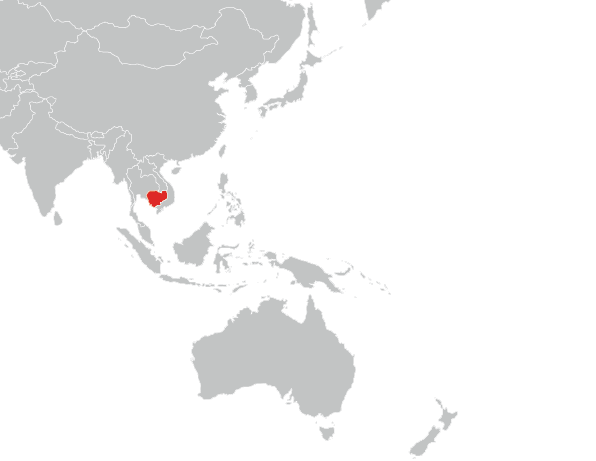
Cambodia has engaged in the voluntary carbon market since at least 2016 and is host to several large ‘reducing emissions from deforestation and forest degradation’ (known as “REDD+”) projects. Prior to COP29, it had demonstrated its interest in the Article 6 mechanisms by providing letters of authorisation to two Verra projects in early 2024.2
In 2024, Cambodia published its “Operations Manual for the Implementation of Article 6 of the Paris Agreement on Climate Change in Cambodia” (Manual).3 The Manual demonstrates Cambodia’s willingness to be seen as a suitable location to host a project, by outlining (via step-by-step flowcharts) how proponents can obtain authorisation and implement their projects. The Manual also provides templates of relevant forms in its annexures.
The Manual set out the following eligibility criteria for projects to receive authorisation:4
- The project must be included in the “positive list” of projects – this is the list of “conditional” activities in Cambodia’s most recent NDC.
- A share of the Article 6 units must be reserved for domestic use – this is to ensure that at least some units from each project will be used towards meeting Cambodia’s NDC targets.
- Authorised units must be issued by an eligible carbon mechanism – this means the authorised units are issued under one of the following: (i) Article 6.2 Cooperative Approaches; (ii) PACM; or (iii) “independent carbon mechanisms” (such as Verra and Gold Standard).
- The Article 6 units must be “real, verified, and additional” – the Manual provides requirements to be met, such as that Article 6 units have been independently verified.
- The Article 6 units must have been generated in 2021 or later.
- The project must ensure “environmental integrity” – the requirements for this include setting conservative baselines and minimising the risk of non-permanence.
- The project must be aligned with Cambodia’s sustainable development priorities – these include poverty alleviation and improved public health (see Table 2 in the Manual).
The Manual confirms that ownership of the Article 6 units shall be conferred to authorised project proponents at the point of issuance.5 It also recognises that the Government may claim 10 per cent of Article 6 units where it is “explicitly stated” that the Government of Cambodia took the lead in enacting “policies or legal frameworks necessary for the successful generation of [Article 6 units] by the project.
As to its carbon market infrastructure, Cambodia intends to use the UN-operated PACM registry and other existing registries, including those managed by the “independent crediting mechanisms”, whilst it develops its own national registry.
In its third NDC (published in August 2025), Cambodia reconfirmed its commitment to hosting Article 6 projects by highlighting areas in which it is looking to leverage “Article 6 financing mechanisms”.6 These include projects focused on transitioning to sustainable firewood and feedstock and reducing deforestation (through REDD+ projects).
India
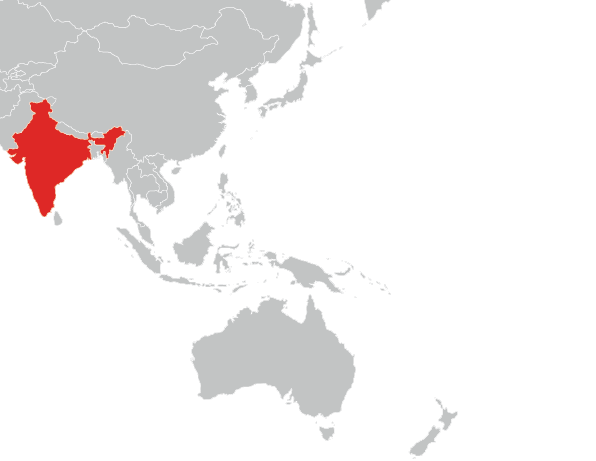
India has substantial experience with carbon markets as it is the country with the second highest number of CDM projects globally.7 More recently, the development of carbon market infrastructure in India has been focused on establishing its “Carbon Credit Trading Scheme” (CCTS) under which carbon projects can generate “carbon credits certificates” (CCCs). The CCTS complements a new ‘compliance mechanism’ whereby “obligated entities” in nine sectors must meet prescribed emissions intensity targets. If an “obligated entity” overachieves its target, it can earn CCCs which can be sold via the CCTS. If it fails to meet its target, it must purchase and surrender CCCs.
The administrator of the CCTS and the issuer of CCCs is the Bureau of Energy Efficiency. The operator of the CCTS registry is the Grid Controller of India. In March 2025, India announced eight methodologies for the CCTS relating to, amongst other things, industrial energy efficiency, landfill methane recovery, and mangrove afforestation and reforestation.8 Further information on the CCTS can be found in the document “Detailed Procedure for Offset Mechanism under CCTS”.9
The implementation of the CCTS will undoubtedly refine India’s carbon market infrastructure and expertise, both of which will make it a suitable location for developing projects under the Article 6 mechanisms.
India has historically demonstrated interest in Article 6 opportunities. In June 2024, it released an updated list of Article 6.2 activities and an identical list of PACM activities, which will be “considered for trading of carbon credits”. The lists include solar power generation, clean cooking, sustainable aviation fuel, an “alternative materials” activity and a carbon capture, utilisation and storage activity.10 In August 2025, India also signed its first Article 6.2 MOU (MOU) with Japan (which will also fall under Japan’s expansive Joint Crediting Mechanism).11 Furthermore, it was recently announced that India’s carbon market portal is expected to be interoperable with Article 6.2 by December 2025, enabling proponents to register their CCTS projects under Article 6.2.12
Indonesia
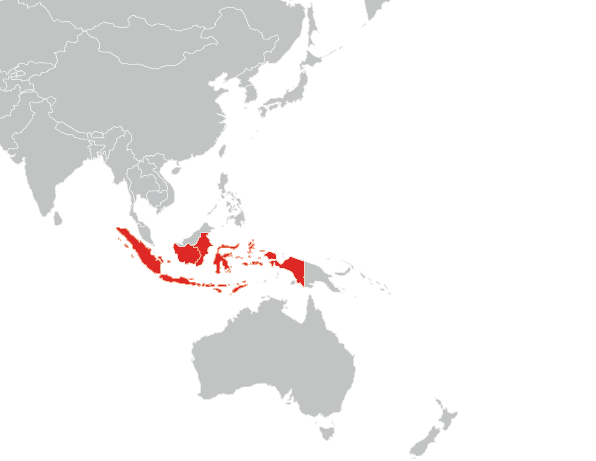
Indonesia’s geography makes it well-suited to hosting nature-based solutions and it has been identified as a possible future “natural supply powerhouse”. It is estimated that by 2030, it could be generating up to 1,283 million tonnes of carbon credits annually.13 The Indonesian Government seems to be acutely aware of this potential. Over the past few years, it has implemented a series of carbon market regulations to ensure the country’s readiness for carbon project opportunities.
Firstly, Presidential Regulation No.98 of 2021 provided the foundation of a carbon pricing scheme called the “Economic Value of Carbon” or “Nilai Ekonomi Karbon” (NEK) which was launched in 2023.14 Similar to compliance schemes in Australia and India, the NEK applies emissions-intensity targets to facilities in the power sector (initially only coal power stations with a capacity above 25 MW). The NEK will capture oil and gas power plants from 2027, as well as the metal, fertiliser and chemicals sectors. The NEK was bolstered by legislation which, in 2022, established Indonesia’s Carbon Trading Roadmap and rules for the issuance of “Emissions Reduction Certificates” or “Sertifikat Pengurangan Emisi” (SPE-GRK), and in 2023, outlined the rules for trading SPE-GRKs on Indonesia’s carbon exchange (known as “IDX Carbon”).15
In turn, Indonesia has successfully negotiated several Article 6 agreements. In June 2025, Norway and Indonesia signed an implementation agreement under Article 6.2.16 (Norway and Indonesia had previously agreed a 2022 MOU confirming collaboration on Indonesia’s “Forestry and Other Land Use Net Sink 2030” plan.17) Indonesia has also signed Article 6.2 MOUs with Singapore, South Korea and Japan.18
In January 2025, Indonesia launched an initiative with IDX Carbon focused on international carbon trading, however this has been slightly dampened owing to integrity concerns about some credits from Indonesian projects. To address this, Indonesia signed Mutual Recognition Agreements (MRAs) with Gold Standard in May 2025,19 and Verra in October 2025.20 As a result, Indonesian projects can now be recorded in both the Indonesian National Registry System for Climate Change Control and the Gold Standard or Verra registries. This enables these projects to benefit from a streamlined project registration process, improved monitoring, reporting and validation processes, and support when trading credits internationally.
In October 2024, Japan formalised a MRA with Indonesia that recognises the equivalence of JCM credits and SPE-GRKs. While Indonesia already hosts 51 JCM projects, the MRA will streamline future carbon trading between the two countries.21 This may result in greater demand for projects generating Article 6 units in Indonesia over the coming years.
As Indonesia looks to define itself as an optimal location for hosting Article 6 projects, it will be aided by the development of its internal market over the previous few years and a clear focus in 2025 on boosting the integrity of its projects. This means it should be well-placed to deliver on its Article 6.2 agreements and seize on additional opportunities in the future.
Japan
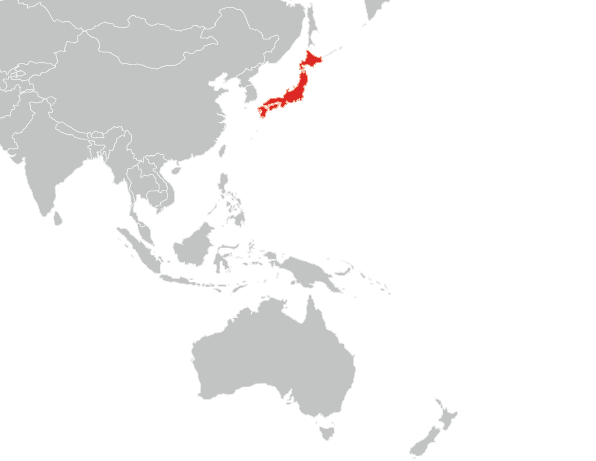
Japan is one of the most experienced and proactive countries engaging in cooperative emissions reduction having established its own model of cooperative approaches, the Joint Crediting Mechanism (JCM), in 2013. The JCM is implemented via bilateral agreements under which Japan subsidises and contributes technology to decarbonisation projects in the partner country, with these projects producing credits which are shared between the two countries. Japan is now party to 31 JCM country agreements,22 with the first being agreed with Mongolia in 2013 and the most recent one being signed with India in August 2025. Japan aligned the JCM with the Article 6 Rulebook prior to the Rulebook’s adoption at COP29.23
Japan relies heavily on carbon credits to meet its reduction targets and is expected to grow the JCM substantially in the coming years through new projects and partnerships. According to its NDC, Japan intends to use JCM projects to secure approximately 100 million tCO2-e in emission reductions and removals by 2030 and approximately 200 million tCO2-e by 2040.24 Additionally, in May 2025, Japan made its national emissions trading scheme (ETS) mandatory for companies which emit more than 100,000 tCO2-e per year (from the 2026 financial year onwards).25 This is expected to capture 300-400 entities. As JCM credits can be surrendered for compliance purposes, Japan’s national ETS is therefore likely to be a key driver of the continued expansion of the JCM.26
Japan is the secretariat of the Article 6 Implementation Partnership, which contributes to capacity building and knowledge-sharing among countries that implement Article 6.27 Considering Japan’s extensive experience in cooperative emissions reduction and its many existing JCM agreements, it is unsurprising that Japan is shaping best practices for countries which are only just beginning to engage with the Article 6 mechanisms.
Malaysia
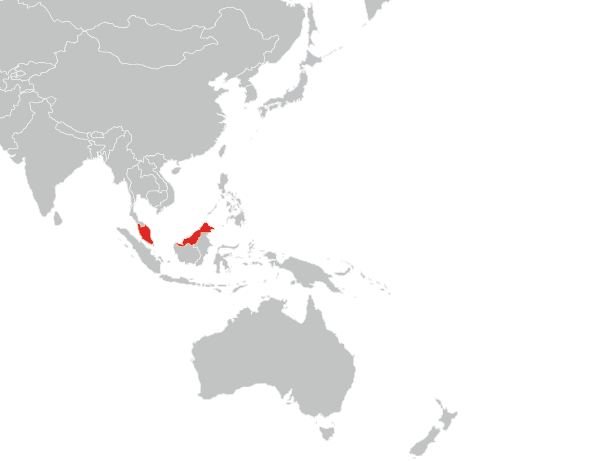
Article 6 readiness is a prime focus in Malaysia. In early October 2025, Malaysia’s Deputy Natural Resources and Environmental Sustainability Minister spoke at the Dewan Rakyat (Malaysia’s Parliament) to confirm that the government is finalising the National Carbon Market Policy. The policy will outline how Malaysia will implement both Article 6 mechanisms and expand the voluntary carbon market under the Bursa Carbon Exchange (which is the Malaysian exchange for the trading of carbon credits and renewable energy certificates).28
He also said that Malaysia is developing technical infrastructure to comply with Article 6.4, including a regulatory body and registry to record transactions. In relation to Article 6.2, Malaysia signed MOUs with Korea in November 2024 and with Singapore in January 2025 (with the intention being to finalise an implementation agreement with Singapore by the end of 2025).29
Beyond the Article 6 mechanisms, Malaysia has been developing its broader carbon markets infrastructure over the past few years with a specific focus on carbon abatement opportunities arising in the forestry sector and from carbon capture and storage. In July 2024, the Bursa Carbon Exchange carried out its first auction of Malaysian carbon credits. These were sourced from the Kuarmut Rainforest Conservation Project,30 which is registered under Verra and has received international attention for its size, covering 84,000 hectares of forest.31
With its significant carbon abatement potential and a clear willingness to engage with Article 6, Malaysia looks set to be an ideal location for hosting Article 6 projects.
Singapore
Singapore has emerged as a major player in carbon markets, defining itself as a “carbon services and trading hub”.32
Whilst it has limited natural resources to generate carbon credits, Singapore has enthusiastically embraced the Article 6 mechanisms to progress its NDC targets. It agreed its first Cooperative Approach with Papua New Guinea in 2023 and has now signed more Article 6.2 bilateral agreements than any other Party to the Paris Agreement, except Japan.33 Further, Singapore has fostered demand for Article 6 units by recognising them as eligible under its International Carbon Credit (ICC) Framework, which permits carbon taxable facilities to use eligible ICCs to offset up to 5 per cent of their taxable emissions. The ICC Framework requires ICCs to be produced under specific Verra or Gold Standard methods,34 and to satisfy the framework’s high-integrity principles.35
To ensure that ICCs issued are adequately validated, verified, issued and retired, Singapore’s National Environmental Agency signed MOUs with five carbon credit programs to utilise their advanced capabilities and resources. These include the Gold Standard, Verra, Global Carbon Council, American Carbon Registry and the Architecture for REDD+ Transactions.36
Singapore has also established itself as a global carbon trading hub by leveraging its reputation for financial services and commodity trading. There are now 70 different organisations providing carbon-related services in Singapore, including Climate Impact X.37 This has been partially a result of Singapore’s “Emerging Strong Taskforce: Alliances for Action”, which develops public-private partnerships to address tricky challenges, one of these being the development of a trustworthy and robust voluntary carbon market.38
Finally, Singapore has been involved in providing recommendations and uniform approaches toward Article 6. At COP28, Singapore, Gold Standard and Verra announced they were developing an Article 6 Playbook to provide a harmonised standard of operating procedures for countries to increase their use of existing independent carbon crediting programs (ICPs).39 In November 2024, this group released the initial recommendations for an Article 6.2 Crediting Protocol (Protocol). The Protocol emphasised the benefits of using ICPs in Article 6 cooperation and set out a timeline for development of the Article 6 Playbook.40 Moreover, in June 2025, Singapore announced the “Coalition to Grow Carbon Markets” with the United Kingdom and Kenya, which promotes private sector demand for carbon credits and continued progress on Article 6.41
Thailand
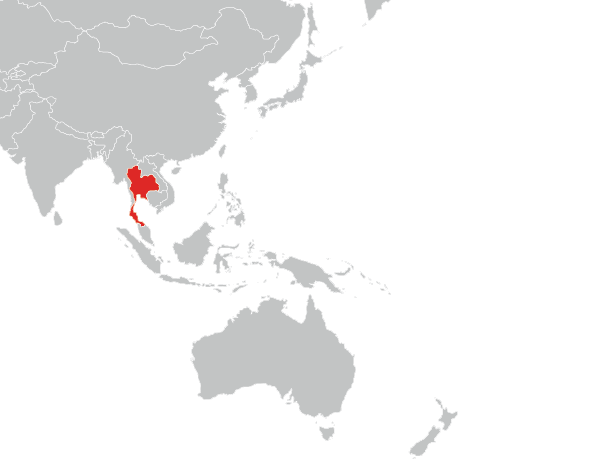
Thailand has also taken a leading role within APAC to maximise Article 6 opportunities. In January 2024, Thailand and Switzerland were the first countries to successfully implement an authorised mitigation activity under Article 6.2 and transfer Article 6 units.42 Thailand has signed various JCM agreements and has 11 registered JCM projects.43 International agreements and Article 6 unit transfers can be tracked through the Thailand Carbon Credit Registry (TCCR), managed by the Greenhouse Gas Management Organisation (TGO), which records carbon credit projects in Thailand and total credit issuance.44
Thailand’s ability to engage with Article 6 has been bolstered by the development of its domestic voluntary emission reduction program (T-VER). T-VER was launched in 2013 and enables proponents to carry out greenhouse gas abatement projects in the energy efficiency, waste management, transport, forestry and agricultural sectors. This not only meant that the TCCR was already in place when the Article 6 Rulebook was finalised, but also that Thailand could quickly produce policies and guidelines for the creation and transfer of Article 6 units.45
Whilst the TGO supports Article 6 project registration, monitoring and verification, the National Committee on Climate Change Policy (NCCC) is responsible for overseeing the implementation of Article 6 policies.46 In September 2025, the Thai Cabinet adopted the “International Carbon Credit Guideline” (Guideline) to align Thailand’s domestic carbon credit framework with the Article 6 mechanisms, including establishing the Department of Climate Change and Environment as the Designated National Authority (which is responsible for issuing letters of authorisation) and confirming that the TGO will manage record transfers of Article 6 units and coordinate with the UN’s Article 6.4 Supervisory Body.47 The Guideline also identified ten project types – covering the energy, forestry, agriculture, transport, waste management and carbon capture and storage sectors – which can generate carbon credits to be transferred overseas.
Thailand has also been making efforts to elevate integrity within T-VER, especially following the failure of T-VER credits to satisfy some international standards, as demonstrated by these credits recently being deemed ineligible for use under CORSIA.48 In August 2022, Verra and the TGO signed a MOU to ensure T-VER standards align with international best practice.49 In 2023, the TGO released more stringent ‘Premium T-VER’ rules, which continue to be revised to ensure consistency with international standards.50
This has likely contributed to a strong growth in carbon credit trading in Thailand, and a correlative increase in the value of T-VER credits. From October to December 2024, T-VER reached a record high in carbon credits traded, amounting to $834,000 AUD.51 The Thai Government is supporting the momentum with a proposed measure to allow businesses to use carbon credits to offset 15 per cent of their carbon tax liabilities.52 Once in place, the carbon tax would cover Thailand’s transport, energy and industrial sectors which account for about 30 per cent of Thailand’s emissions.53
Viet Nam
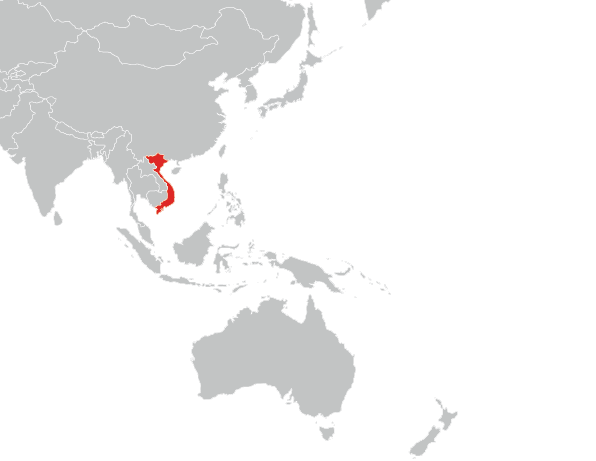
Although Article 6 was not mentioned in Viet Nam’s latest NDC, it has historically shown interest in engaging with other countries to cooperate on climate change. In 2013, Viet Nam signed a bilateral agreement with Japan, making it the sixth country to join the JCM.54 In total, Viet Nam has 48 JCM projects of which 9 have successfully been issued with credits.55 Separately, Viet Nam has signed Article 6.2 bilateral agreements with South Korea and Singapore,56 with the latter being agreed in September 2025.
Most carbon credit projects within Viet Nam take place under voluntary schemes, with 44 projects registered under Verra and 42 under the Gold Standard as of October 2025.57 Viet Nam holds significant potential in generating carbon credits through mangrove forest restoration, renewable energy development and waste management, however its domestic carbon infrastructure is considered fragmented and limited.58
Currently Viet Nam does not have a formalised national carbon credit trading system to rely on as support for Article 6 implementation. However, it is in the process of implementing an emissions trading system which will operate on a hybrid basis of government-allocated emissions allowances and an obligation for captured entities to purchase and surrender carbon credits if their emissions surpass those allowances.59 The first phase of the scheme, which launched in June 2025, targets steel, cement and thermal power producers.60 Credits which are eligible to be used for compliance purposes can be sourced from domestic and international mechanisms including PACM, the JCM and the CDM.61
It is anticipated that the implementation of Viet Nam’s emissions trading scheme will create demand for domestic projects and the purchase of Article 6 units from overseas. It will also entail the development of critical carbon markets infrastructure to enable Viet Nam to access additional Article 6 opportunities in the future.
How can we help?
NRF’s carbon markets team has extensive experience advising stakeholders, including project developers, carbon credit purchasers and intermediaries, in voluntary and mandatory carbon market schemes around the world. We have been following the implementation of the Article 6 procedures and infrastructure around the world and are well placed to advise on emerging opportunities that Article 6 presents.
We have offices located throughout the APAC region. If you have any questions regarding this update, do not hesitate to contact a member of Norton Rose Fulbright’s carbon markets team.
Footnotes
-
Asian Development Bank, “Asia-Pacific Climate Report 2024: Catalyzing Finance and Policy Solutions”, pg XXIV. Accessed online: Asia-Pacific Climate Report 2024
-
Carbon Pulse, “Cambodia, GGGI finalise operations manual for Article 6 trading in the country” (15 January 2024). Accessible online here: Cambodia, GGGI finalise operations manual for Article 6 trading in the country « Carbon Pulse
-
Ministry of Environment, “Operations Manual for the Implementation of Article 6 of the Paris Agreement on Climate Change in Cambodia” (2024). Accessible online here: Article-6-OM_EN.pdf
-
Kingdom of Cambodia, “Cambodia’s Nationally Determined Contribution” (2020). Accessible online here: Cambodia First NDC (Updated submission) | UNFCCC
-
Manual, page 5.
-
Kingdom of Cambodia, “Cambodia's Third Nationally Determined Contribution (NDC 3.0)” (July 2025). Accessible here: https://unfccc.int/sites/default/files/2025-08/Cambodia-NDC%203.0_0.pdf
-
Bureau of Energy Efficiency, “Carbon Market”. Accessible online here: https://beeindia.gov.in/carbon-market.php
-
Ministry of Power, “Turning Climate Commitments into Action: India’s Carbon Offset Plan Hits the Ground” (March 2025). Accessible online here: Press Release:Press Information Bureau
-
Ministry of Environment, Forest and Climate Change “Detailed Procedure for Offset Mechanism under CCTS” (March 2025). Accessible online here: https://beeindia.gov.in/sites/default/files/Detailed_Proceedure_for_Offset_Mechanism_under_CCTS.pdf
-
Government of India Ministry of Environment, Forest and Climate Change, “Office Memorandum” (June 2024). Accessible here: revised_list_article_6.2.pdf
-
Ministry of Environment, Forest and Climate Change, “India and Japan sign Memorandum of Cooperation on Joint Crediting Mechanism (JCM) under Article 6.2 of the Paris Agreement on Climate Change” (August 2025). Accessible here: https://www.pib.gov.in/PressReleasePage.aspx?PRID=2161892
-
Carbon Pulse, “India prepares portal for cross-border trading as Article 6.2 integration nears” (October 2025). Accessible online: https://carbon-pulse.us10.list-manage.com/track/click?u=98e16e4087837ec9f0445f260&id=f93783e6f9&e=9f8f810ca2
-
PwC, ‘Indonesia Carbon Market White Paper’ (December 2024). Accessible online here: Indonesia Carbon Market White Paper
-
President of the Republic of Indonesia, ‘Regulation of the President of the Republic of Indonesia Number 98 of 2021’ (2021). Accessible online here perpres-nomor-98-tahun-2021-english-version.pdf.
-
IETA, “Unlocking Carbon Markets in Indonesia” (April 2025). Accessible here: https://www.ieta.org/uploads/wp-content/2025/09/BPMI_Indonesia-_PP.FINAL2025.pdf
-
Global Green Growth Institute, ‘Indonesia and Norway Sign Bilateral Agreement Under Article 6 to Advance Climate Cooperation With GGGI Support’ (2025). Accessible online here Indonesia and Norway Sign Bilateral Agreement Under Article 6 to Advance Climate Cooperation With GGGI Support — Global Green Growth Institute
-
Norwegian Ministry of Climate and Environment, ‘Contribution Agreement Concluded: Norway Delivers US$ 56 Million In Results-Based Support For Indonesia’s FOLU Net Sink 2030 Climate Goals’ (2022). Accessible online here Contribution Agreement Concluded: Norway Delivers US$ 56 Million In Results-Based Support For Indonesia’s FOLU Net Sink 2030 Climate Goals - regjeringen.no; IA Pradnja Resosudarmo, R Astuti and P Kanowski, ‘Indonesia and Norway’s renewed climate change partnership’ (2023). Accessible online here Indonesia and Norway’s renewed climate change partnership | East Asia Forum
-
Singaporean National Climate Change Secretariat, ‘Singapore and Indonesia Sign Memorandum of Understanding Concerning Cooperation on Climate Change and Sustainability’ (2022). Accessible online here Singapore and Indonesia Sign Memorandum of Understanding Concerning Cooperation on Climate Change and Sustainability; Antara: Indonesian News Agency, ‘Indonesia, South Korea sign cooperation in carbon emission reduction’ (2024). Accessible online here Indonesia, South Korea sign cooperation in carbon emission reduction - ANTARA News. Indonesian Palm Oil Association, ‘RI Inks Carbon Agreement With Japan, First In The World’ (2024) Accessible online here RI Inks Carbon Agreement With Japan, First In The World - Gabungan Pengusaha Kelapa Sawit Indonesia (GAPKI)
-
SSEK Law Firm, ‘Indonesia Signs Mutual Recognition Agreement with Gold Standard for Carbon Credits’ (2025). Accessible online here Indonesia Signs Mutual Recognition Agreement with Gold Standard for Carbon Credits - SSEK Law Firm
-
Carbon Pulse, “Verra, Gold Standard, Puro deepen ties with Indonesia to bolster country’s carbon market” (October 2025). Accessible here: https://carbon-pulse.com/441722/
-
Carbon Herald, ‘COP29: Japan And Indonesia Strike First Bilateral Carbon Trading Deal.’ Accessible online here: COP29: Japan And Indonesia Strike First Bilateral Carbon Trading Deal
-
Ministry of Foreign Affairs of Japan, “Joint Crediting Mechanism (JCM)” (October 2025). Accessed online: https://www.jcm.go.jp/about
-
Carbon Markets Express (Ministry of the Environment, Government of Japan), ‘Implementation of Paris Agreement Article 6 (Market Mechanisms)’. Accessed online: Implementation of Paris Agreement Article 6 (Market Mechanisms)|Carbon Markets Express.
-
Government of Japan, ‘Japan’s Nationally Determined Contribution (NDC)’ (2025). Accessible online here: Japan’s Nationally Determined Contribution.
-
Carbon Pulse, “Japan legislates mandatory ETS from 2026” (May 2025). Accessible online: https://carbon-pulse.com/402219/
-
Asia Society Policy Institute, “ETS Status: Japan GX-ETS”. Accessible online: https://asiasociety.org/policy-institute/ets-status-japan
-
A6IP, ‘Establishment of the Paris Agreement Article 6 Implementation Partnership Center.’ Accessed online: Article 6 Implementation Partnership
-
The Edge Malaysia, “Article 6 carbon market expected to be operational by 2026, says deputy minister” (October 2025). Accessible here: https://theedgemalaysia.com/node/772872
-
Carbon pulse, ‘Thailand, Malaysia to finalise Article 6 agreements with Singapore by end of year -officials’ (2025). Accessible online here Thailand, Malaysia to finalise Article 6 agreements with Singapore by end of year -officials « Carbon Pulse
-
Bursa Malaysia, ‘Bursa Carbon Exchange Auctions First Malaysian Nature-Based Carbon Credits’ (2024). Accessible online here 240725_PR_BCX_Kuamut_Auction_Outcome__vf__-_UPDATED_930_PM.pdf
-
FairAtmos, “https://www.fairatmos.com/blog/malaysias-kuamut-rainforest-conservation-project-initiates-first-credit-issuance” (September 2025). Accessible here: Malaysia's Kuamut Rainforest Conservation Project Initiates First Credit Issuance | Fairatmos Insights
-
National Climate Change Secretariat, ‘Singapore Joins The Article 6 Implementation Partnership at COP27’ (2022). Accessible online here: Singapore Joins The Article 6 Implementation Partnership at COP27
-
UNEPCC, ‘Article 6 Pipeline’ (2025). Accessible online here: Article 6 Pipeline - UNEP-CCC
-
National Climate Change Secretariat, ‘Singapore and Ghana Launch First Call For Project Applications Under IA On CC Cooperation’ (2024). Accessible online here: Singapore and Ghana Launch First Call For Project Applications Under IA On CC Cooperation; National Climate Change Secretariat, ‘Singapore and Ghana Launch First Call For Project Applications Under IA On CC Cooperation’ (2024). Accessible online here: Singapore and Ghana Launch First Call For Project Applications Under IA On CC Cooperation
-
Ministry of Trade and Industry Singapore, ‘Singapore Sets Out Eligibility Criteria For International Carbon Credits Under The Carbon Tax Regime’ (2023). Accessible online here: Singapore Sets Out Eligibility Criteria For International Carbon Credits Under The Carbon Tax Regime | Ministry of Sustainability and the Environment
-
National Climate Change Secretariat, ‘Carbon Services and Trading’ (2025). Accessible online here Carbon Services And Trading.
-
Ministry of Trade and Industry Singapore, ‘The Alliances for Action (AfA). Accessible online here The Alliances for Action (AfA); Climate Impact X, ‘about’. Accessible online here: About CIX | Empowering global climate action.
-
Verra, ‘Joint Press Release: Singapore, Verra and Gold Standard Partner to Develop Playbook for Carbon Crediting Under the Paris Agreement’ (2023). Accessible online here: Singapore, Verra and Gold Standard Partner to Develop Playbook for Carbon Crediting | Verra; National Climate Change Secretariat, Gold Standard and Verra, ‘Operationalising Article 6: Initial recommendations for an Article 6.2 Crediting Protocol for the use of independent carbon crediting programmes’ (2024). Accessible online here https://www.nccs.gov.sg/files/docs/default-source/default-document-library/Article_6_Protocol_v1_11Nov2024_final.pdf
-
National Climate Change Secretariat, Gold Standard and Verra, ‘Operationalising Article 6: Initial recommendations for an Article 6.2 Crediting Protocol for the use of independent carbon crediting programmes’ (2024). Accessible online here https://www.nccs.gov.sg/files/docs/default-source/default-document-library/Article_6_Protocol_v1_11Nov2024_final.pdf
-
The Coalition to Grow Carbon Markets, ‘First-of-its-kind government coalition to issue shared principles on carbon credit use by COP30 to boost climate finance’ (2025); Voluntary Carbon Markets Integrity Initiative, ‘The Coalition to Grow Carbon Markets’. Accessible online here: Coalition to Grow Carbon Markets | VCMI
-
Foundation for Climate Protection and Carbon Offset KliK, ‘First ever ITMOs for NDC use Greenhouse gas mitigation activity "Bangkok E-Bus Programme" delivers first ITMOs under Article 6.2 of the Paris Agreement for NDC use’ (2024). Accessible online here: https://www.klik.ch/en/news/news-article/first-ever-itmos-for-ndc-use
-
UNEPCC, ‘Article 6 Pipeline’ (2025). Accessible online here: Article 6 Pipeline - UNEP-CCC
-
Thailand Greenhouse Gas Management Organisation, ‘Carbon Credit Project Inventory’ (2025). Accessible online here: TGO Carbon Registry System
-
Department of Climate Change and Environment, “Use of carbon credits for international purposes (Article 6 of the Paris Agreement)”. Accessible here: https://www.dcce.go.th/article6/policies/
-
C Prandstetten et al, ‘Thailand Article 6: Readiness and Needs Assessment’ (2023). Accessible online here https://www.spar6c.org/sites/default/files/downloads/best-practices/Thailand.pdf
-
Thai Cabinet, “International Carbon Credit Guideline” (September 2025). Accessible here: https://www.dcce.go.th/wp-content/uploads/2025/08/International-Carbon-Credit-Guideline-1.pdf
-
Carbon Pulse, ‘Thailand, British Columbia to take extra time to re-apply for CORSIA eligibility’ (2020). Accessible online here Thailand, British Columbia to take extra time to re-apply for CORSIA eligibility « Carbon Pulse
-
Verra, ‘TGO and Verra Sign MOU to Support Voluntary Emission Reduction Program’ (2022). Accessible online here TGO and Verra Sign MOU to Support Voluntary Emission Reduction Program - Verra
-
Carbon Pulse, ‘Thailand’s revamped voluntary carbon credit framework comes with stricter oversight’ (2025). Accessible online here Thailand’s revamped voluntary carbon credit framework comes with stricter oversight « Carbon Pulse; Electricity Generating Authority of Thailand, ‘TGO, EGAT, and partners present first Premium T-VER model of forest sector in Thailand’ (2023). Accessible online here: TGO, EGAT, and partners present first Premium T-VER model of forest sector in Thailand - Electricity Generating Authority of Thailand
-
ESG Post, ‘Thailand targets 2027 for voluntary carbon market launch’ (2025). Accessible online here Thailand targets 2027 for voluntary carbon market launch — ESG Post
-
H Lee and S T Tong Lee, ‘Thailand Plan Would Allow Polluters to Offset 15% of Emissions’ (2025). Accessible online here Thailand Carbon Credit Scheme Would Allow Businesses to Offset 15% of Emissions - Bloomberg
-
Carbon Pulse, “Thai govt seeks consultation on second climate change bill, with market provisions” (March 2024). Accessible here: https://carbon-pulse.com/271155/
-
Joint Crediting Mechanism, ‘Japan and the Socialist Republic of Viet Nam signed the bilateral document to start the JCM’ (2013). Accessible online here: JCM Viet Nam - Japan.
-
Klinova, “Vietnam - Japan Potential for Cooperation through the Joint Crediting Mechanism (JCM)” (August 2025). Accessible here: Vietnam - Japan Potential for Cooperation through the Joint Crediting Mechanism (JCM)
-
UNEP-CCC “Article 6 Pipeline” (September 2025). Accessible here: Article 6 Pipeline - UNEP-CCC
-
Verra Registry (October 2025). Accessible here: https://registry.verra.org/app/search/VCS Gold Standard Registry (October 2025). Accessible here: https://globalgoals.goldstandard.org/certify-a-project/
-
Viet Nam News, ‘Shaping Việt Nam's carbon credit market demands robust institutional framework’ (2025). Accessible online here Shaping Việt Nam's carbon credit market demands robust institutional framework; BCG Eco, ‘COP29: A Pivotal Turning Point for Vietnam's Carbon Market’. Accessible online here COP29: A Pivotal Turning Point for Vietnam's Carbon Market
-
International Carbon Action Partnership, ‘Vietnam approves carbon market roadmap, pilot ETS to launch in June 2025’ (2025). Accessible online here Vietnam approves carbon market roadmap, pilot ETS to launch in June 2025 | International Carbon Action Partnership; Socialist Republic of Viet Nam, ‘Decree No 06/2022/ND-CP’ (2022). Accessible online here 06/2022/ND-CP in Vietnam, Decree 06/2022/ND-CP mitigation of green house gas emissions in Vietnam; Socialist Republic of Viet Nam, ‘Decision No 232/QD-TTg’ (2025). Accessible online here Decision 232/QD-TTg 2025 approving the Carbon Market Development Scheme in Vietnam.
-
Reuters, ‘Vietnam launches first phase of emissions trading scheme’ (2025). Accessible online here Vietnam launches first phase of emissions trading scheme | Reuters
-
International Carbon Action Partnership, ‘Vietnam approves carbon market roadmap, pilot ETS to launch in June 2025’ (2025). Accessible online here Vietnam approves carbon market roadmap, pilot ETS to launch in June 2025 | International Carbon Action Partnership; K Irie, TN Anh Mai, T Oikawa, ‘Propsects for the Carbon Credit Market in Vietnam and its Impact on Japanese Companies’ (2025). Accessible online here Atsumi & Sakai Newsletter | Vietnam Team